

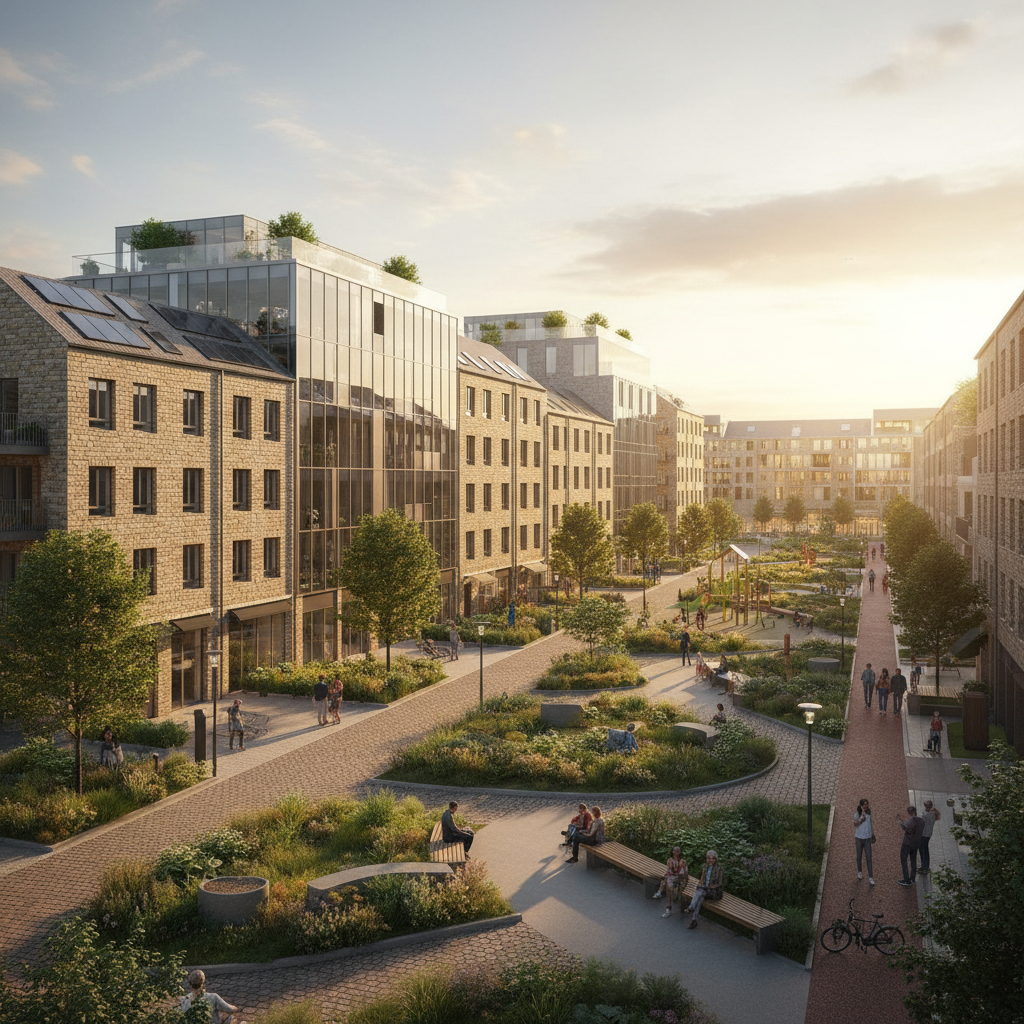
The Banderas Bay region in Nayarit has established itself as one of the areas with the greatest economic dynamism in western Mexico.
This sustained growth has generated particular conditions for the development of residential communities that seek to balance economic accessibility with quality of life.
Zitadela, strategically located in this region, represents an example of how urban planning can adapt to local economic realities without sacrificing the well-being of its inhabitants.
Understanding the cost of living in any location requires analyzing multiple variables that go beyond nominal prices.
The economic stability of a region determines not only how much is paid for goods and services, but also the predictability of these costs over time.
In the case of Zitadela, its location in an economic corridor that connects important tourist centers creates a particular ecosystem where job opportunities, access to services and relatively competitive housing costs converge.
A realistic cost-of-living analysis should consider both direct expenses and qualitative factors that influence daily well-being.
The available infrastructure, proximity to employment centers, access to basic services, and the quality of the social environment make up a set of elements that impact the real economic experience of residents.
This comprehensive approach allows us to evaluate not only nominal affordability, but also the effective value of living in a specific community within the regional economic context.
Current economic context of Zitadela and its influence on the cost of living
The economy of Banderas Bay is based on a combination of tourism activity, real estate development and services linked to these sectors.
This economic diversification generates a relatively stable labor market that directly influences consumption patterns and the local price structure.
Unlike single-dependent economies, the region has multiple sources of fiscal and private income that contribute to maintaining a more resilient economic base in the face of specific sectoral fluctuations.
Zitadela's location, ten minutes from Nuevo Vallarta and thirty minutes from Puerto Vallarta, positions it within an active economic corridor without the extra costs associated with prime tourist areas.
This strategic proximity allows residents to access better-paying jobs in tourist centers while maintaining more moderate housing and service costs.
Connectivity with the Puerto Vallarta International Airport, just twenty minutes away, expands economic opportunities and facilitates access to wider markets.
Real estate development in the area has followed orderly growth patterns, with projects that cater to diverse market segments.
This diversified offering avoids the excessive speculation that characterizes destinations with less regulation, helping to maintain more stable and predictable prices.
The presence of developments backed by groups with a proven track record brings certainty to the market, a fundamental factor for economic stability at the community level.
The available financing mechanisms, including institutional options such as FOVISSSTE and INFONAVIT, democratize access to housing and expand the base of residents with formal and stable incomes.
Impact of economic stability on the cost of living and quality of life in Zitadela
The impact of economic stability on the cost of living and quality of life in Zitadela is mainly manifested in the predictability of expenses and the sustained availability of services.
When a region experiences economic volatility, prices tend to fluctuate sharply, making it difficult for families to plan their finances.
In contrast, regional stability allows residents to project their expenses with greater certainty, facilitating medium- and long-term investment decisions that improve their assets and well-being.
Economic stability facilitates continued investment in community services, maintenance of common areas, and development of amenities that enrich the residential experience.
In communities like Zitadela, this translates into well-maintained recreational spaces, consistent security, and reliable basic services that do not depend on short economic cycles but on sustainable planning.
The relationship between economic stability and social cohesion is particularly relevant in planned residential contexts.
Communities with lower resident turnover, supported by stable employment and predictable costs, tend to develop stronger social bonds and a more consolidated community identity.
This social capital represents an intangible but extremely valuable asset that contributes to general well-being and the subjective perception of quality of life.
Economic stability, therefore, not only determines how much is spent, but also how sustainable and enriching the experience of inhabiting a given space is.
Key factors that determine the costs of housing, food and services in Zitadela
Housing costs in the Banderas Bay region They respond to a combination of structural and cyclical factors. Land prices, the availability of urban infrastructure, construction costs, and financing conditions are the fundamental variables.
In the specific case of Zitadela, the supply of housing units ranges around 1.3 million pesos for two and three level prototypes, positioning itself in an accessible segment compared to developments in direct coastal areas where prices can double or triple these amounts.
The availability of institutional financing options significantly expands access to housing for formal workers.
The FOVISSSTE, INFONAVIT, and COFINAVIT schemes allow the acquisition cost to be distributed over extended periods with preferential rates, reducing the barrier to entry and making wealth formation viable for middle segments of the population.
This access to formal credit also contributes to economic formalization and the financial stability of families, creating a virtuous circle of economic security.
The cost of food and basic services in the region reflects both tourism activity and local production. Proximity to regional supply centers and connections to national distribution networks keep food prices within competitive ranges.
Public services such as water, electricity, and internet have standard costs for developing urban areas in Nayarit, without the surcharges that characterize tourist islands or isolated destinations.
Transportation, facilitated by proximity to main roads and employment centers, represents a moderate expense compared to cities with greater urban dispersion where daily commutes involve considerably greater distances and times.
Relationship between employment, wages and purchasing power in the economic context of Zitadela
The labor market in the Banderas Bay region is characterized by a diversified supply that ranges from tourism and hotel services to construction, commerce and professional services.
This sectoral variety creates opportunities for different occupational profiles, from operational positions to middle management and specialists.
The constant demand for personnel in the Nuevo Vallarta-Puerto Vallarta corridor maintains relatively stable employment levels, a crucial factor for the economic security of residents in communities like Zitadela.
Wages in the region's tourism and service sector tend to be above the state averages in Nayarit, although below those observed in large national metropolises.
This wage difference is partially offset by more affordable housing and service costs, resulting in effective purchasing power that can be competitive with or higher than that of cities with higher nominal wages but proportionally higher living costs.
The favorable economic equation is reinforced when qualitative factors such as shorter commute times, less urban stress, and better environmental quality are considered.
The real purchasing power of residents does not depend solely on monetary income, but on the relationship between this income and the cost of satisfying basic and aspirational needs.
In contexts where housing represents a moderate percentage of family income, there is more room for spending on education, health, recreation, and savings.
Access to community amenities without significant additional costs, such as recreational areas, sports facilities, and green spaces, enhances effective well-being without increasing current spending.
This economic configuration allows families to achieve satisfactory quality of life levels with incomes that would be insufficient in other urban contexts.
Future economic prospects and their possible effect on quality of life and costs in Zitadela
Projections for the Banderas Bay region point to sustained economic growth driven by tourism consolidation and infrastructure development.
Plans to expand road connectivity, improve public services, and attract private investment create a favorable scenario for real estate appreciation and economic diversification.
This growth, if managed properly, can translate into a greater supply of skilled jobs, better average wages, and access to higher quality services without disproportionate increases in basic living costs.
Future economic stability will depend largely on the region's ability to diversify its economic base beyond traditional tourism.
Attracting creative industries, remote professional services, and technology sectors can complement the tourism economy and reduce vulnerability to fluctuations in visitor flows.
For residential communities like Zitadela, this diversification represents employment opportunities for residents with diverse professional profiles, strengthening income stability and the ability of families to pay.
Potential risks include inflationary pressures stemming from real estate speculation and increased demand for services that could exceed local supply capacity.
Responsible management of urban growth, effective regulation of the real estate market, and public investment in infrastructure proportional to population growth will be key to maintaining a balance between economic development and accessibility.
Continuous monitoring of indicators such as the income-housing ratio, the formal employment rate, and the availability of basic services will allow for the adjustment of policies and strategies to preserve the conditions that currently make the region an attractive destination for establishing permanent residence with a sustainable quality of life.
Conclusion
The analysis of the cost of living in Zitadela reveals an economic configuration where regional stability, strategic location and orderly urban planning converge to offer favorable conditions of accessibility and quality of life.
The economic diversification of Banderas Bay, based on tourism, services and real estate development, generates an active labor market that sustains the purchasing power of the residents.
The availability of institutional financing options democratizes access to housing, while proximity to major employment centers optimizes transportation costs and time, fundamental variables in daily well-being.
Economic stability not only determines nominal prices, but also the predictability and sustainability of costs over time, an essential element for family financial planning and wealth building.
The favorable outlook for the region, contingent upon responsible management of growth and continued economic diversification, suggests that current conditions can not only be maintained but gradually improved.
For those evaluating residential options, understanding these structural factors is fundamental to making informed decisions that balance quality of life aspirations with sustainable economic realities in the medium and long term.
Frequently Asked Questions
What is the price range for housing in Zitadela?
Housing units in Zitadela are priced at approximately 1.3 million pesos, depending on the specific model and features. These prices place them in an accessible segment compared to developments in direct coastal areas.
The availability of institutional financing options such as FOVISSSTE and INFONAVIT facilitates access to these properties for formal workers.
How does Zitadela's location affect the cost of living?
The strategic location, ten minutes from Nuevo Vallarta and thirty minutes from Puerto Vallarta, allows access to better-paying jobs in tourist centers while maintaining more moderate housing and service costs than in beachfront areas.
This proximity reduces transportation costs and travel time, improving the effective purchasing power of residents.
What factors contribute to the region's economic stability?
The regional economy is based on a combination of tourism activity, real estate development and related services, which generates economic diversification.
This diverse economic base reduces vulnerability to sector-specific fluctuations and maintains relatively stable employment levels. The presence of developments backed by groups with a proven track record provides additional certainty to the local market.
How does purchasing power in Zitadela compare with other urban areas?
Although salaries may be lower than in major metropolitan areas, more affordable housing and service costs result in competitive purchasing power. The favorable ratio between income and basic expenses leaves more room for education, health, recreation, and savings.
Access to community amenities at no additional cost enhances well-being without increasing current spending.
What are the future economic prospects for the area?
Projections point to sustained growth driven by tourism consolidation and infrastructure development. Diversification into creative industries, remote professional services, and technology sectors could complement the tourism economy.
Success will depend on the responsible management of urban growth and public investment proportional to demographic development in order to maintain a balance between economic progress and accessibility.


 Spanish
  English
  French
  Chinese