

Introduction
Bahía de Banderas has established itself in recent years as an important focus of urban development in the Nayarit region.
The evolution of its residential areas has marked a significant change in the quality of life of its inhabitants, thanks to the integration of new infrastructure, services and housing proposals aimed at different social sectors.
This urban phenomenon not only responds to the demand for housing, but also seeks to promote orderly and sustainable growth.
Interest in residential projects that combine functionality, accessibility, and recreational spaces has transformed the housing landscape in Banderas Bay.
This environment fosters dynamic community development, where the quality of life is reflected in the services offered, connectivity, and social interaction within the new communities.
Analyzing the quality of life and development in residential areas of Bahía de Banderas involves understanding both the progress of its infrastructure and the challenges it still faces in consolidating itself as a prosperous and equitable urban area.
In this context, we will examine the evolution of urban development, outstanding projects, key infrastructure, economic impact, and the social challenges that shape the local agenda.
Evolution of urban development in Banderas Bay and its impact on quality of life
Urban development in Banderas Bay has experienced accelerated growth over the past decade, driven by urbanization and the growing demand for housing.
This evolution has led to a diversification in the housing supply, from luxury residences to projects accessible to middle and low income families, thus promoting a demographic balance.
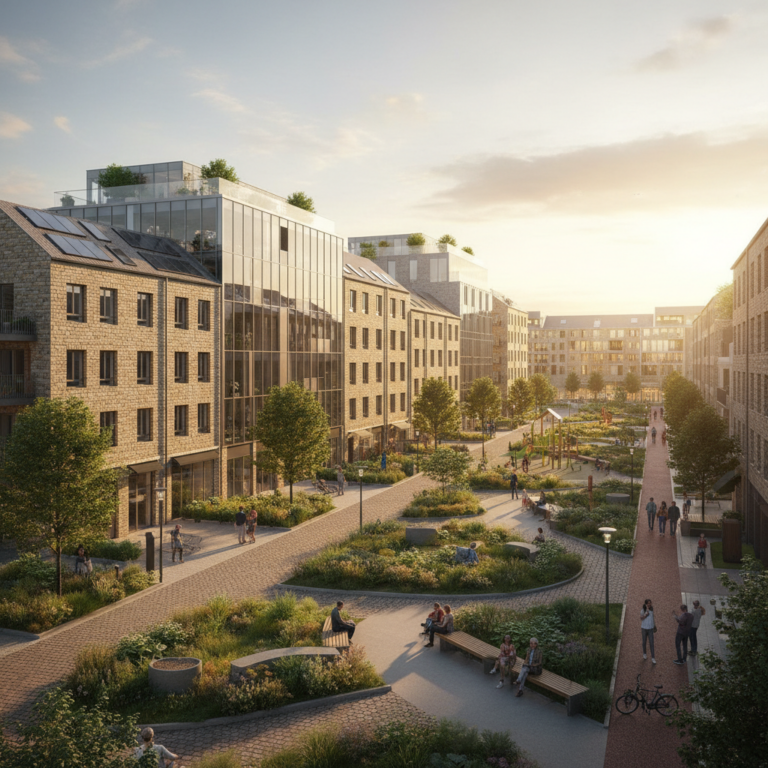
This growth has improved the quality of life by incorporating green areas, recreational facilities, and public spaces that promote community integration.
However, it also presents a challenge in terms of planning and sustainability, forcing authorities and developers to implement strategies that minimize environmental and social impact.
Furthermore, road connectivity and proximity to basic services have become crucial factors in valuing new residential developments, raising the standard of living by facilitating access to employment, education and health centers.
Notable residential projects and their contribution to development in residential areas of Banderas Bay
In Bahía de Banderas, residential projects like Zitadela exemplify the integration of modern amenities and community spaces that enhance the quality of life for its residents.
These types of developments include clubhouses with swimming pools, sports areas, interactive parks, and technology zones that promote a healthy and socially active lifestyle.
These projects contribute to local development not only by providing housing, but also by creating spaces that foster social cohesion and overall well-being. The inclusion of commercial areas and meeting spaces facilitates interaction among residents, strengthening the sense of community.
Likewise, the Financing options such as FOVISSSTE and INFONAVIT They expand access to quality housing for different sectors, which implies a significant advance in obtaining a decent home and improves the social structure of the area.
Infrastructure and services: keys to improving quality of life and development in residential areas of Banderas Bay
Infrastructure plays a fundamental role in improving the quality of life in residential areas of Banderas Bay. The implementation of efficient services such as drinking water, electricity, public transportation, and modern roads ensures the daily well-being of residents.
Parks, sports areas, and cultural spaces are integrated into urban planning, contributing to social development and healthy leisure activities. These amenities not only enhance the quality of life but also increase property values and strengthen community identity.
On the other hand, accessibility to educational and health services is crucial to maintaining harmonious and sustainable development, allowing families to access relevant opportunities without the need for excessive travel.
Economic impact of residential growth in Banderas Bay and future prospects
Residential growth in Banderas Bay has a significant economic impact, both in the creation of jobs in construction and services and in boosting local commerce. This development attracts investment that contributes to strengthening the regional economy.
Furthermore, increased property values benefit both property owners and the local market, encouraging new projects that adapt to the evolving needs of the population. A diversified housing stock fosters greater social inclusion and improves the overall quality of life.
Future prospects point to consolidating Bahía de Banderas as an attractive residential hub, with sustainable urban planning that integrates technological innovation, environmental respect and social cohesion as pillars of development.
Social and urban challenges to sustain development and quality of life in Banderas Bay
Despite progress, Banderas Bay faces significant challenges in sustaining balanced development. Urban growth management must consider the preservation of natural resources and mitigation of problems such as traffic or the saturation of public services.
It is also necessary to address social inclusion through policies that guarantee affordable housing and decent living conditions for all sectors, avoiding urban segregation and promoting community integration.
In urban planning, applying rigorous regulations and promoting projects with sustainable design are essential to maintaining a livable and attractive environment. This requires ongoing collaboration between authorities, developers, and civil society to achieve resilient, high-quality development.
Conclusion
The quality of life and development in residential areas of Banderas Bay reflect a constantly evolving urbanization process that seeks to balance growth, social well-being and sustainability.
The combination of innovative housing projects, comprehensive infrastructure, and adequate services creates a favorable environment for its inhabitants.
Looking ahead, the main challenge will be maintaining this balance, addressing social and urban challenges with policies that promote inclusion and sustainable development. In this way, Banderas Bay can solidify its position as a regional example of quality of life and sustainable urban progress.
Frequently Asked Questions
How does urban development influence the quality of life in Banderas Bay?
Well-planned urban development improves quality of life by integrating basic services, recreational areas, and social spaces that facilitate community life and access to opportunities. However, it is important to manage growth to avoid negative impacts such as infrastructure overload.
Which residential projects stand out in Banderas Bay?
Projects like Zitadela stand out for offering homes with modern amenities, green spaces, and community areas that promote a healthy lifestyle. They also feature accessible financing options, making homeownership easier for various social groups.
What is the economic impact of residential growth in the region?
Residential growth boosts the local economy by creating jobs, stimulating commerce, and increasing property values. This attracts investment and improves the region's overall economic conditions, promoting sustainable development.
What challenges does Banderas Bay face in maintaining its development?
The main challenges include the proper management of urban growth to avoid service overload, environmental preservation, and the promotion of social inclusion through affordable housing policies. Promoting sustainable urban design is also key.


 Spanish
  English
  French
  Chinese